

 en
en ru
ru es
es ar
ar



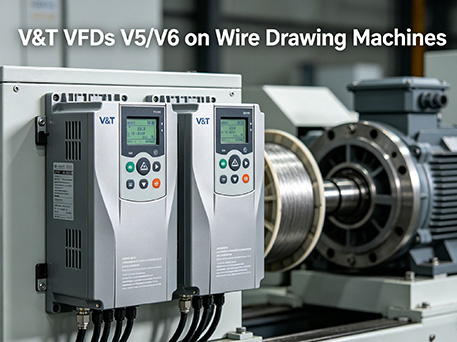
Back in 2012, a customer in Zhejiang Province needed a reliable drive solution for their wire drawing machine—specifically, a 12+1 DP bus configuration for a diameter drawbench. They chose V&T V5/V6 series inverters. These machines run at high speeds of 12–15 m/s, operating 12 hours a day, demanding extreme precision in speed control and strong immunity to electrical noise. The result? Over the next 14 years, from startup in 2012 to 2026, the inverters rarely caused any downtime. "Apart from routine maintenance, these drives practically disappeared—no alarms, no repairs. We almost forgot they were there." And that "invisibility" is the highest compliment you can pay to industrial equipment. In wire drawing, a speed fluctuation of just 0.1% can lead to wire breakage or uneven thickness. The V5/V6 drives maintain rock‑solid dynamic response at high speeds, thanks to their high‑precision vector control algorithm. Their built‑in EMI resistance also handles the inevitable electrical interference of a busy factory floor. Just as important: the modular design makes long‑term maintenance easy. Even if an individual component ages, it can be swapped out quickly—no costly shutdowns, no lost production. Industrial value isn't about peak performance for a day. It's about getting it right, year after year, without fail. Fourteen years can turn a product from "new" into "classic," and a company from chasing speed to embedding quality. V&T thanks every partner—like that customer in Zhejiang—who believes in the slow, steady craft of engineering. Your trust has shown us: build it right, and time will tell the rest.
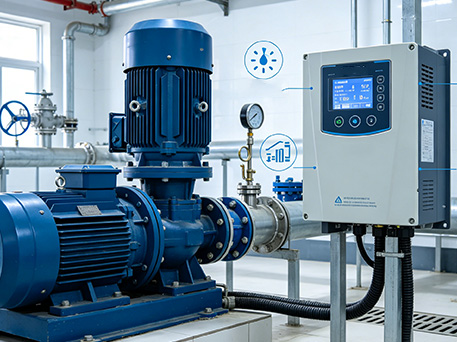
Traditional water pumps often rely on valves to regulate flow. This method is not only cumbersome and incapable of maintaining constant pressure, but it also results in severe energy waste. Nowadays, more and more waterworks and pumping stations have realized that frequency inverters (VFDs) are the key to energy saving—especially for high-power pumps, where the results are immediate. Adopting the V9 Series Frequency Inverter for energy-saving retrofitting of water supply systems offers distinct advantages: Simple Structure, Easy Retrofitting There is no need to replace the original water pumps. Simply adding a frequency inverter cabinet allows for a quick upgrade, ensuring a short Return on Investment (ROI) and significant energy-saving effects. Soft Start/Stop, Extended Equipment Life It eliminates the water hammer effect and reduces mechanical shock. Pumps operate more smoothly, significantly lowering the failure rate and drastically reducing maintenance costs. Reduced Speed, Less Wear With lower average speeds and reduced torque, wear on key components such as blades and impellers is greatly minimized. This extends maintenance cycles and simultaneously reduces labor costs and downtime losses. Constant Pressure, Stable and Reliable The inverter adjusts motor speed in real-time to maintain constant pressure in the pipe network, providing a better water usage experience for users and ensuring more efficient system operation.
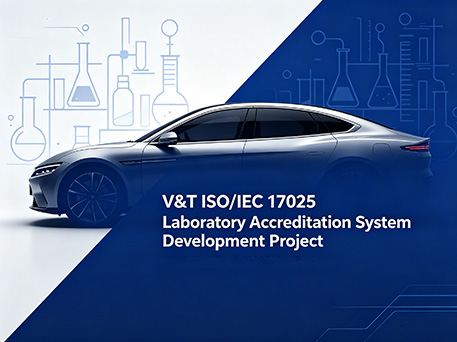
Recently, V&T officially launched its ISO/IEC 17025 laboratory accreditation system development project. This initiative is not about pursuing the prestige of a certification; rather, it is a pragmatic choice based on the company's long-term development strategy. The goal is to enhance the laboratory's technical competence and service quality through standardized management, thereby providing a more solid guarantee for product quality. ISO/IEC 17025 is an internationally recognized standard for laboratory competence, covering core aspects such as management, technology, and operations. It requires not only a standardized management system but also emphasizes the continuous improvement of technical capabilities and the traceability of results. For V&T, the implementation of this system brings three key practical benefits: First, it improves testing reliability. Through staff training, equipment calibration, and method validation, the company ensures accurate and consistent test reports, providing credible data support for R&D and production. Second, it enhances market competitiveness. Once accredited, test results gain international mutual recognition, helping the company overcome technical barriers and expand into both domestic and global markets. Third, it optimizes internal management. By refining quality manuals, procedural documents, and record-keeping systems in accordance with the standard, V&T promotes standardized and transparent processes while reducing operational risks. Following the project launch, V&T will submit its accreditation application as planned and undergo on-site assessments by evaluation teams, including equipment inspections, personnel evaluations, and report audits. Ultimately, CNAS (China National Accreditation Service for Conformity Assessment) will issue the laboratory accreditation certificate. The company firmly believes that certification is not the endpoint but a new starting point for continuous improvement. V&T will not rest on obtaining a certificate alone but will take concrete actions to consistently elevate its laboratory capabilities to new heights.
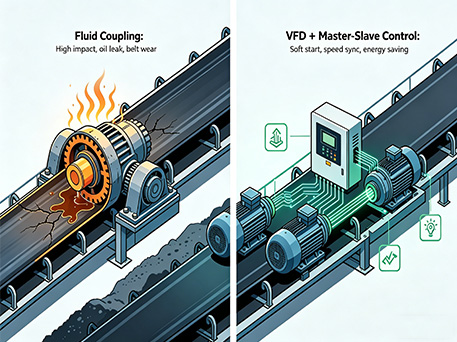
In mining, ports, power plants, and other heavy industries, belt conveyors are the lifeline of material transport. But many sites still rely on fluid couplings for soft starting – and the problems are clear: Narrow speed range, high impact at low speeds Poor load sharing in dual-drive systems, leading to belt aging or even breakage Oil overheating, mechanical wear, leakage – high maintenance costs and environmental pollution How does the VFD + dual-drive communication solution work? Master and slave VFDs communicate in real time, working with the DCS and power detection modules to automatically coordinate speed and load distribution. The master and slave drives exchange status – if one has a minor fault, the other responds immediately. This achieves true speed synchronisation and power balance. Tangible benefits for your operation: Soft start and soft stop – less mechanical stress, longer belt life Continuous frequency adjustment – better adaptability to varying loads No more contactors or speed resistors – lower maintenance costs and downtime Significant energy savings at low speeds – real reduction in electricity bills Cooler, safer working environment – no more heat from resistors Bottom line: VFDs are not just an alternative – they are the clear upgrade path for belt conveyor drives, especially in long-distance, multi-motor applications. The ROI from better synchronisation and energy efficiency is substantial.
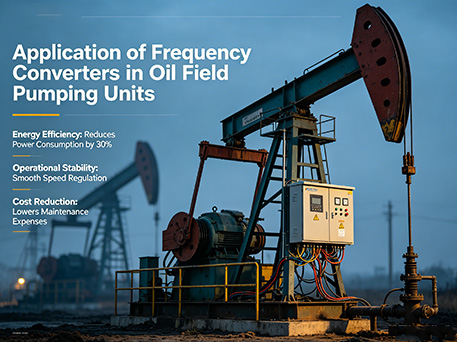
In oilfields, the beam pumping unit remains the undisputed workhorse of oil extraction. While it "nods" day and night, traditional drive methods have long suffered from pain points like high energy consumption and mechanical shock. Driven by the industry's pursuit of extreme energy efficiency, the Variable Frequency Drive (VFD) is emerging as the "smart brain" for this classic piece of equipment. What substantial changes does the VFD bring to the pumpjack? - More Precise Extraction By adapting to downhole conditions, the VFD allows for flexible adjustment of the stroke rate, ensuring pumping efficiency is always maintained at an ideal level. - Smoother Startup Soft starting capabilities can reduce motor starting current by 3-4 times. This effectively protects the motor and transmission mechanisms, extending the equipment's service life. - Safer Operation With built-in multiple protection against over-voltage, over-current, and overload—along with maximum torque limiting—the risk of rod parting (broken rods) is significantly reduced. - Smarter Management Supporting remote speed regulation and centralized monitoring, operators can adjust pumping speeds without replacing hardware, significantly improving O&M (Operations and Maintenance) efficiency. - Energy-Friendly Compared to traditional asynchronous motor solutions, ideal energy-saving effects can reach 10%-20%, aligning perfectly with the upgrade trend towards high-efficiency power sources like permanent magnet synchronous motors.
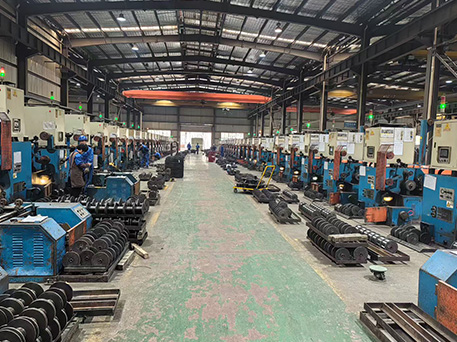
Process Challenges The water tank wire drawing process requires metal wire to maintain a diameter tolerance of ≤±0.01mm during high-speed drawing. Any fluctuation in power can lead to wire breakage or defective products. However, the workshop environment presents a severe test for inverter stability due to: Year-round humidity exceeding 80%. Pervasive metallic dust. Frequent equipment start-stop cycles. Standard inverters often fail to operate reliably over the long term due to start-stop surges, dust-induced short circuits, or the inherent conflict between cooling requirements and protection ratings. V&T Solution: V5/V6 Series The V&T V5/V6 series inverters feature targeted designs to overcome these challenges: Torque Control:Delivers smooth torque output during start-stop cycles to handle sudden load increases. Robust Construction:A sealed structure blocks dust intrusion, while the cooling system is adapted for high-load operation. This design has prevented circuit shorting or overheating failures for 16 years. Precision Control:Dynamically matches drawing speed to tension changes, ensuring stable wire precision. Delivered Value This robust design delivers tangible value: Continuous Production:Zero unplanned downtime ensures controllable order delivery. Low Maintenance:Requires only regular dust removal; no major repairs have been recorded. Quality Assurance:Scrap rates remain consistently low.
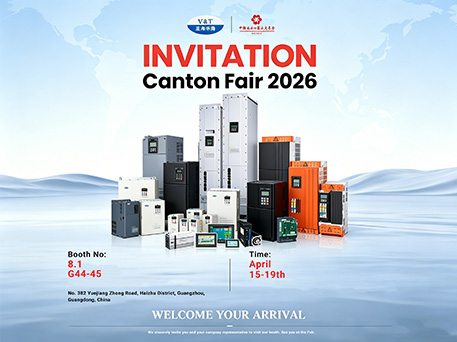
Dear clients, I am writing to extend a warm invitation on behalf of V&T to attend the 139th Canton Fair and visit our booth from April 15th to 19th. Details Date: April 15-19, 2026 Booth No.: Hall 8.1, G44-45 Exhibition Address: 382 Yuejiang Middle Road, Haizhu District, Guangzhou, Guangdong, P.R. China At our booth, you will have the chance to experience our latest products and services firsthand. We look forward to your visit and the opportunity to explore potential business collaborations. If you require any further information or arrangements, we would be more than happy to assist you. Please reserve some time in your schedule to visit our booth. We eagerly anticipate meeting you at the Canton Fair. Thanks for your attention and support. Best regards, Shenzhen V&T Technologies Co., Ltd.
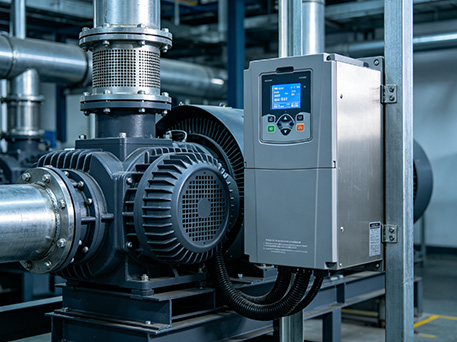
As a typical positive displacement fan, the Roots blower is widely used in industrial fields due to its compact structure and non-internal compression characteristics. However, high energy consumption and startup shocks under traditional operating conditions have long plagued users. Recently, V&T successfully implemented a V9 series variable frequency drive (VFD) retrofit solution for an enterprise in Anshan, delivering a "standard answer" across three dimensions: energy efficiency, equipment lifespan, and intelligent operation and maintenance (O&M). Background: Addressing Traditional Pain Points Roots blowers rely on two three-lobe impellers rotating synchronously in opposite directions to transport gas. The air volume is directly proportional to the speed, and there is no internal compression process. In actual production, most enterprises still use damper regulation or start/stop control to match air demand. This results in significant energy waste. Furthermore, the high current impact generated by direct motor starting accelerates mechanical wear, shortening the lifespan of key components like bearings and oil seals, thereby driving up maintenance costs. The enterprise in Anshan had long struggled with these issues and decided to seek a VFD retrofit solution. After comparing multiple options, the V&T V9 series was selected as the final choice due to its dedicated algorithms for positive displacement loads and reliable quality. Three Major Advantages: V&T V9 Provides the "Standard Answer" 1. Precise Energy Efficiency Control: Supply on Demand, No Waste The V&T V9 VFD directly drives the Roots blower motor. Utilizing the characteristic that "air volume is proportional to speed," it dynamically adjusts the speed based on actual air consumption to achieve precise, on-demand supply. This completely replaces the traditional, inefficient damper regulation method, eliminating throttling losses. After the retrofit, the enterprise saw a reduction in fan power consumption of over 20%, with a significant improvement in overall system energy efficiency. 2. Soft Start/Stop: Significantly Extended Equipment Lifespan Addressing the mechanical shock that easily occurs during the start/stop moments of the three-lobe impeller structure, the V9 VFD features built-in soft start and soft stop functions. This allows the motor current to rise and fall smoothly, completely eliminating impact currents on the power grid. On-site operation data shows that after the retrofit, fan vibration values dropped by more than 30%, and mechanical wear was noticeably reduced. The service life of bearings and fluororubber oil seals is expected to extend by more than 100%, significantly reducing the frequency of spare parts replacement. 3. Fully Automated O&M: Worry-Free Production Line Stability The V9 VFD integrates multiple protection functions—including overcurrent, overvoltage, phase loss, and overheat protection—to monitor the motor and fan status in rea...
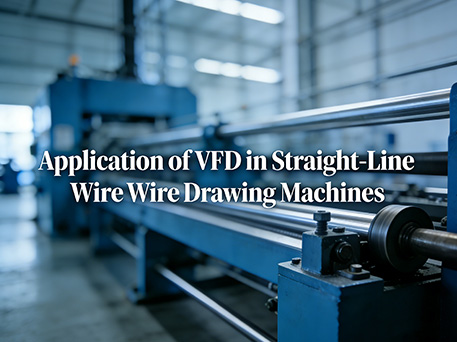
Metal wire drawing is a critical stage in wire production. The straight-line wire drawing machine consists of multiple drawing heads, cold-drawing the wire to the target specification in a single pass through progressive drawing. It features high efficiency and strong continuity, making it widely used in high-precision wire processing fields. Core Challenges During high-speed continuous production, the VFD must simultaneously meet several stringent requirements: outputting high torque with stable operation during startup and low-frequency stages; controllable swing amplitude of the tension swing arm during wire threading; fast and stable response to target tension; and possessing system functions such as arbitrary die skipping, meter-stop, weight-stop, and die wear estimation to ensure the coordinated operation of the entire line. Solution The system uses a PLC as the control core to perform all logic operations and data processing, achieving efficient communication with the VFD. The main VFD quickly responds to PLC commands to ensure stable and uniform wire drawing tension; the take-up VFD cooperates with a constant tension control algorithm to evenly wind the finished wire onto the spool or 'elephant nose' take-up device, realizing fully automated closed-loop control throughout the process. Technical Advantages • High-precision Diameter Calculation Built-in specialized diameter calculation function tracks the real-time change of the winding radius, effectively preventing wire breakage risks and ensuring long-term stable and reliable operation of the equipment. • Superior Torque Control Outputs high torque in the low-frequency range with rapid response, thoroughly solving the problem of difficult startup under load, and adapting to frequent start-stop operations under heavy load conditions. • Leading Constant Tension Control Algorithm Breaking through traditional tension control schemes, the tension fluctuation during the winding process is extremely small. The operational results have been highly recognized by customers, significantly improving finished product quality and equipment competitiveness.

As a core component of the "three-electric" system in new energy vehicles, the motor controller undertakes critical responsibilities for overall vehicle energy management and power output. It serves not only as the electrical energy conversion hub between the battery and the drive motor but also determines the vehicle's dynamic performance, energy efficiency, and operational reliability. In the recently completed South Korean electric bus project, V&T's electric vehicle motor controller successfully fulfilled all commissioning tasks with outstanding performance, enabling the client to efficiently pass all whole-vehicle test items. This achievement once again confirms its stability and reliability under demanding operating conditions. Precise Control Unleashing Exceptional Climbing Performance South Korea's terrain features numerous mountains, frequent curves, and drastic altitude changes, imposing extremely high demands on the power systems of electric buses. Throughout the testing process, vehicles equipped with V&T motor controllers demonstrated exceptional performance. They operated smoothly under complex conditions involving continuous climbs, multiple curves, and high altitudes, effortlessly reaching the summit of a mountain approximately 1,200 meters above sea level. This fully validates their suitability for high-altitude mountainous environments. The control precision of the motor controller directly impacts acceleration smoothness and climbing capability. Through precise regulation of torque and speed, V&T products ensure a stable and fluid driving experience even under complex road conditions. Efficient Energy Recovery Optimizing Range Performance Under braking or coasting conditions, the V&T motor controller can rapidly switch the motor to generator mode, efficiently recovering energy and recharging the battery. This further enhances the vehicle's overall range, providing superior energy consumption performance for electric buses operating on long slopes and winding roads. Multiple Safety Mechanisms Ensuring Stable High-Voltage System Operation Safety is paramount for the operation of new energy commercial vehicles. The V&T motor controller incorporates multiple real-time monitoring mechanisms, including over-voltage, under-voltage, and over-temperature protection, providing full-time safeguarding for the high-voltage system. During the testing phase of this South Korean project, the product maintained stable operation without any anomalies or failures, fully demonstrating its high reliability under rigorous conditions. Collaborative Control Enhancing Overall Vehicle Intelligence By working in synergy with the Vehicle Control Unit (VCU) and the Battery Management System (BMS), the V&T motor controller supports advanced functions such as cruise control and optimized energy distribution, providing solid support for overall vehicle intelligence. As a core link in the powertrain of new energy vehicles, the performan...
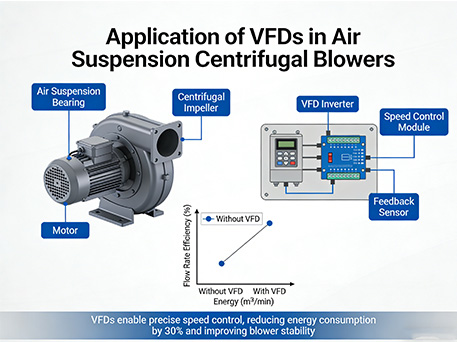
Industry Challenge Traditional blowers operate at fixed speeds with mechanical transmission, leading to high energy consumption, limited speed control, and complex maintenance—critical issues in wastewater, chemical, and metallurgical industries. The Solution Our high-performance VFD serves as the intelligent core of permanent magnet air suspension centrifugal blowers, enabling: Precision Speed Control IGBT modules provide infinite speed adjustment from 10,000-100,000 rpm, dynamically matching airflow to process demands while high carrier frequency reduces electromagnetic noise. Superior Energy Efficiency 96%+ VFD control efficiency paired with 95-98% permanent magnet motor efficiency delivers 30-50% energy savings over traditional blowers. Direct drive eliminates gearbox losses (99% transmission efficiency). Intelligent Process Control Built-in PID algorithm automatically optimizes airflow and pressure for applications like DO control in wastewater. Modbus RTU enables remote monitoring of speed, temperature, and power. Comprehensive Protection KEB function prevents bearing damage during power outages Surge detection algorithm avoids unstable operation Temperature monitoring (Class H, 180°C withstand) with automatic derating Clean & Compact Design Oil-free operation meets GMP standards for food/pharma. Integrated VFD cabinet reduces footprint by 50%. Anti-corrosion coatings withstand up to 200°C and harsh environments. Customer Benefits ✓ 30-40% energy reduction in wastewater applications ✓ 10+ year service life with no mechanical wear ✓ 50% less maintenance through soft-start and predictive protection ✓ Full compliance with environmental and cleanroom standards Applications Wastewater: Precision aeration control saves 30-50% energy while improving treatment quality Chemical/Metallurgy: Handles corrosive gases and high temperatures reliably Food/Pharma: Oil-free, low-harmonic operation meets GMP requirements Transform your blower system with intelligent VFD control—contact us for a customized solution.

On this International Women's Day, we celebrate the beauty of unity, the resilience of the human spirit, and the warmth of sisterhood. Whether you are a trailblazer, a dreamer, a caregiver, or a fighter, your story is unique and valuable. Your presence makes the world brighter! Let us celebrate the joy of being women—our compassion, our creativity, and our ability to bring light to the world. Let’s cherish our past, embrace our present, and inspire one another to build a future filled with hope and harmony.
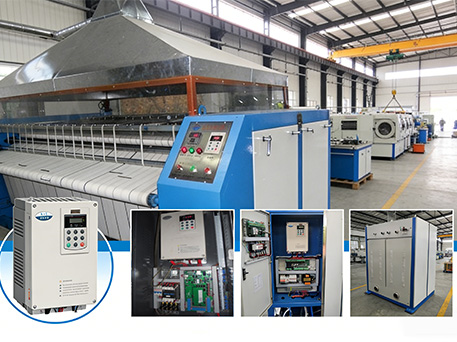
Industrial washing machines are driven by motors that rotate the drum in forward and reverse directions, achieving cleaning effectiveness through the relative motion between clothes and water flow. During the upgrade from traditional two-speed motors to variable frequency speed control, equipment demands higher requirements for the drive system's torque response, speed control precision, and environmental adaptability. The V&T frequency converter, specifically designed for washing equipment operating conditions, features high starting torque output capability, ensuring smooth startup under heavy-load conditions. It supports multi-segment speed free programming, allowing flexible matching of speed requirements for different process stages such as washing, distribution, and dehydration. Integrated with automatic slip compensation technology, it dynamically adjusts frequency to maintain synchronization between speed and load, thereby improving dehydration efficiency. Additionally, it offers wide voltage adaptability and a reinforced structural design, enabling long-term stable operation in high-temperature and high-humidity industrial environments. Practical applications demonstrate that the V&T frequency converter effectively reduces mechanical shock and wear, extends equipment service life, and provides reliable support for refined adjustments of washing processes. It represents a key upgrade direction for enhancing the operational quality and reliability of industrial washing machines.
In the wave of industrial intelligent transformation, V&T (stock code: 300484) has always been exploring technology integration and industrial upgrading with steady steps. Recently, the company announced that it, together with its related party Mr. Jiang Zhongwen and two other unrelated parties, would jointly increase the capital of Wanren Wisdom Intelligent Technology (Beijing) Co., Ltd. (hereinafter referred to as "wanrenai") by 24 million yuan, of which V&T contributed 8 million yuan, holding 1.60002% of the shares. This investment aims to inject more efficient intelligent solutions into the field of industrial automation through resource integration and technological innovation. As a "National High-tech Enterprise" and a "Little Giant Enterprise", V&T has been deeply engaged in the fields of new energy and industrial automation for 20 years. Relying on profound technical accumulation and continuous innovation capabilities, the company has built a rich and diverse product matrix, covering frequency converters, servo drives, electric vehicle motor controllers, DC/DC, elevator drive control systems, industrial control system solutions, and many other fields, which are widely used in numerous industries around the world. In 2025, the company's net profit is expected to grow by 69.85%-98.76% year-on-year (2025 annual performance forecast), maintaining steady growth. This investment in wanrenai is an important step for V&T to extend from its existing business to the "intelligent hardware + AI service" model. As an emerging force in the field of intelligent technology, wanrenai is a high-tech enterprise focusing on the research and development and commercial landing of embodied artificial intelligence technology. Its business scope covers normal development construction and market expansion, AI project development and operation, as well as the research and development of hardware, software, and algorithms related to embodied intelligence and other frontier fields. At present, wanrenai has successfully launched its first humanoid robot product "Xiaoqian" and the "Dongfeng AI Large Model", achieving commercial landing in application scenarios such as medical care, energy saving, agriculture, and stores, serving multiple customers. Against this background, V&T's capital increase in wanrenai is based on the company's overall strategic development and future operational development needs, aiming to deeply strengthen the synergistic effect of the industrial chain and realize the effective integration of advantageous resources through resource integration and complementary advantages. This move will not only help wanrenai achieve faster and better development in the field of intelligent technology, but also deepen V&T's strategic layout in the field of robotics, laying a solid foundation for the company's own technical accumulation and market layout in related fields, which will have a positive and far-reaching impact on the company...
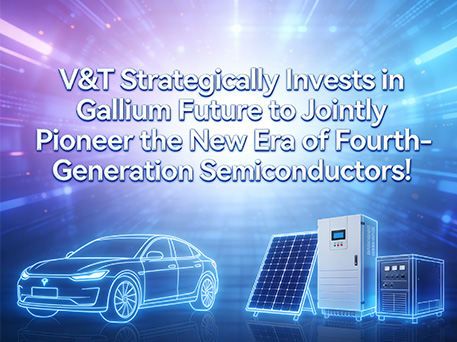
Shenzhen V&T Technologies Co., Ltd. (V&T) recently took a big step in its industry plan. The company finished a strategic investment in JCWL, a new player in fourth-generation semiconductors. This move gives JCWL new energy to grow. It also starts a new chapter for V&T as it explores fourth-generation semiconductor technology. Capital Helps Build the Industry JCWL already got early money from Juzhuo Capital’s Jinjiang Talent Fund and XFZ SEMI. These funds helped the company stand out. Now, V&T’s investment is a key turning point. It helps JCWL move from research to real production. V&T is a well-known name in industrial automation and parts for electric cars. The company knows a lot about electronic control and how customers use these parts. This deal is not just about money. Both companies believe fourth-generation semiconductors have a bright future. They want to use money and industry knowledge together. Their goal is to build a strong ecosystem for this new technology. Working Together Solves Problems JCWL uses technology from Xidian University. Its main team has worked in research for over ten years. The company is one of the few in China that can mass-produce special gallium oxide wafers. It uses its own method called HVPE. This process grows high-quality gallium oxide on materials like silicon carbide and sapphire. Key results match the best in the world. This success makes it easier to sell gallium oxide power devices. V&T has a strong system for electronic control and lots of practical experience. The company understands how power devices must work in tough factory settings. Now that they are partners, they will share their skills. They plan to innovate together deeply. By working closely across the supply chain, they will solve hard problems for gallium oxide devices. This will make products work better and last longer. It will also speed up the use of gallium oxide technology. Current Steps Shape the Future JCWL’s first project in the Jinjiang Integrated Circuit Park is now in trial operation. V&T’s investment gives strong support to build more capacity and turn ideas into products. Going forward, both sides will work closely. They will focus on what the market needs. Their main goal is to test gallium oxide devices in electric cars, solar inverters, and industrial power supplies. V&T will use its sales channels and customer contacts in the new energy and automation fields. This gives JCWL real places to test and improve its products. Such help will make products better faster. Meanwhile, JCWL will focus on researching and making gallium oxide technology. The company aims to keep improving quality and making more products. Both parties want to make JCWL a top global supplier of core materials for fourth-generation semiconductors. Their joint work will help grow China’s fourth-generation semiconductor industry. This investment is a major move for V&T in the fourth-generation semiconductor field. It is...

Dear Valued Customer, Greetings! Thank you for your continued trust and support of V&T! As the Chinese New Year approaches, we would like to extend our warmest wishes and heartfelt gratitude to you and your team. Please be advised of our 2026 Chinese New Year holiday schedule as follows: Holiday Period: February 13, 2026 – February 24, 2026 (12 days) Office Reopening: February 25, 2026 During this period, regular business operations and customer service will be suspended. Should you have any urgent matters, please feel free to email us at mailto:overseas@v-t.com, and we will address your request promptly upon our return. We sincerely apologize for any inconvenience this may cause and appreciate your understanding. Wishing you and your family a joyful, prosperous, and successful New Year! Best regards, Shenzhen V&T Technologies Co., Ltd.
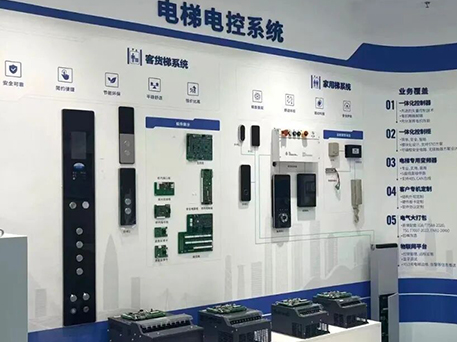
In the world of vertical transportation, elevator integrated controllers—often called “elevator all-in-one drives”—act like the heart of an elevator system, keeping it running smoothly and reliably. At an office building in Suzhou, a V&T elevator all-in-one drive has quietly served as that vital core for two years. During this time, it has powered over 700,000 trouble-free trips—a quiet but powerful testament to its strength and reliability. The building stands 29 stories tall and sees heavy foot traffic every day. Its elevators carry up to 1,000 kilograms and move at 2.5 meters per second. Mornings bring rush-hour crowds, with people flooding in and out across floors. Even after work hours, the elevators keep moving steadily to meet ongoing demand. Through it all, the V&T drive has never faltered. It starts quickly, delivers smooth acceleration, stops precisely, and gives passengers a ride that feels both safe and comfortable—every single time. This consistent performance comes from solid engineering. The drive uses permanent magnet synchronous technology, which is more efficient and uses less energy than older systems. Less energy means lower operating costs for the building—and less heat, which helps the unit last longer. It also runs on smart control software that adjusts power output based on how full the elevator is. This keeps performance steady no matter the load. Built-in diagnostics watch the system around the clock. If something unusual happens, the drive reacts right away to prevent bigger problems and keep riders safe. These 700,000 successful runs aren’t just a number—they show what V&T can do. And they’re pushing the company to aim even higher. Looking ahead, V&T will keep focusing on innovation, quality, and service. It plans to invest more in research to make its products smarter and more efficient. The company also supports national goals for energy savings and will keep developing greener, cleaner drive technologies. At the same time, it’s working to improve after-sales support so customers get faster, friendlier, and more reliable help whenever they need it. With proven performance and a clear vision, V&T’s elevator all-in-one drives are ready to serve more buildings—and help shape a safer, smoother, and more sustainable future for vertical transportation.
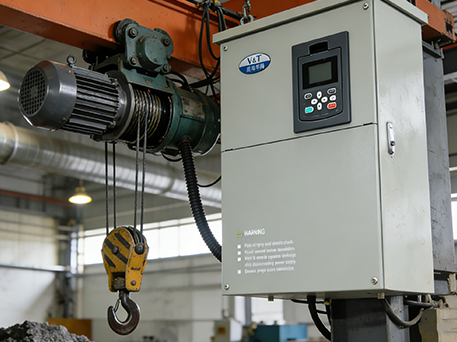
In precision assembly and heavy lifting operations, traditional 50/60 Hz electric hoists often suffer from harsh startup shocks, noticeable swinging, poor synchronization, and rapid brake wear. A manufacturing company addressed these issues by upgrading their hoists with variable frequency drives (VFDs), significantly improving performance and reliability. · The VFD allows smooth control of motor acceleration and deceleration. This eliminates the sudden jolt at startup and the abrupt stop during braking. As a result, mechanical shock drops by about 70%, which greatly extends the life of chains and structural parts. · Because the VFD adjusts power output based on load, multiple hoist points can move in sync. After the upgrade, the height difference between two lifting points stays within ±3 mm. The load remains level automatically after positioning, boosting work efficiency by roughly 25%. · Braking also becomes far more dependable. The system holds the load steady at zero speed before engaging the mechanical brake. This cuts brake pad wear by over 90%. Even if power fails, the motor maintains holding torque to prevent the hook from slipping—making the whole operation safer. Overall, variable frequency technology transforms a basic electric hoist from a simple lifting tool into a precise motion system. It directly tackles three key problems: mechanical shock, inaccurate positioning, and over-reliance on mechanical brakes. For demanding lifting tasks, this upgrade offers a reliable and cost-effective solution.
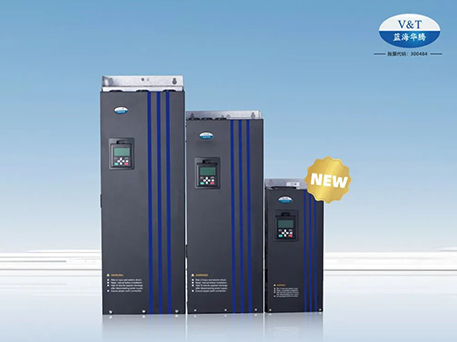
In the field of industrial automation, variable frequency drives (VFDs), as core equipment for motor control, directly impact the efficiency and stability of production lines. Leveraging its profound technical expertise, V&T has launched the VTS31 series general-purpose VFD—a compact drive offering exceptional compatibility and a rich set of features, delivering an innovative solution for variable-torque load applications such as fans and pumps. The VTS31 series is a compact general-purpose variable frequency drive developed by V&T. It supports both synchronous and asynchronous motor control and comes standard with an LCD keypad. Featuring simple operation, small size, light weight, and comprehensive protection functions, it is ideally suited for variable-torque load applications like fans and pumps. The series covers motor power ratings from 1.5 kW to 500 kW. Key Features: Compact design Supports V/F control, asynchronous current-vector control, asynchronous voltage-vector control, and open-loop synchronous motor control Optimized for fan and pump applications Standard communication protocols: Modbus RTU and CANopen Multiple keypad options: standard Chinese/English LCD keypad; optional LED keypad For models rated up to 650 A: multiple drives can share a common DC bus Cabinet-type units (725 A and above) can be customized to meet specific customer requirements and on-site installation needs regarding input/output wiring configurations
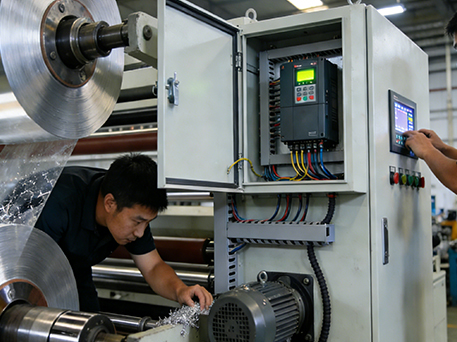
Industry Challenges In traditional constant tension control systems for aluminum strip slitting machines, the unwinding motor operates as a generator. This produces a large amount of regenerative energy. Conventional solutions typically use external braking resistors to dissipate this electrical energy. This approach leads to energy waste, higher costs, and reduced system stability. Innovative Solution V&T offers an optimized control solution based on its specialized tension control inverters, the V6-T-T8 series. This solution features an innovative common DC bus design. Winding Section: Two V6-T-T8 inverters are used. Unwinding Section: One V6-T-T8 inverter is used. Traction Section: One general-purpose V5-H series inverter is used. Key Advantages High Energy Efficiency: During unwinding, the motors generate regenerative power. This power is directly used by the winding and traction motors through the common DC bus. This internal energy recycling greatly improves overall energy savings. Precise Control: The system uses advanced torque control technology. It ensures stable tension, resulting in neater strip edges and higher product quality. Cost Reduction: The system eliminates the need for braking units and resistors. This lowers both the initial investment and ongoing maintenance costs. Stable Operation: The system structure is simplified, and voltage fluctuations are minimized. This ensures continuous, high-efficiency production. User-Friendly Operation: Key parameters can be set with one click. Different process modes, like single or double-side winding, can be switched quickly. The interface is intuitive and displays real-time operational data clearly. Application Results This solution successfully tackles the key challenges of high energy consumption and insufficient control precision in aluminum strip slitting. It achieves effective energy recycling, lowers operating costs, and increases productivity. V&T provides customers with a cost-effective, intelligent, and sustainable drive solution.
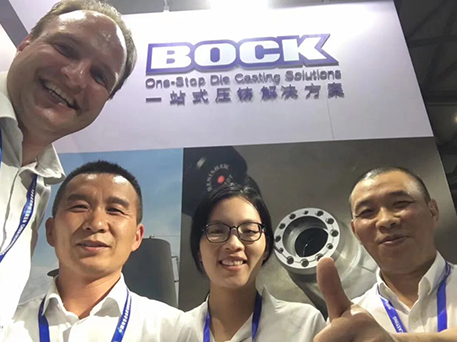
The V&T asynchronous servo system has successfully enabled Bock (Dongguan) to complete an energy-saving retrofit of its die casting machines. Following project submission, Germany-based BOCK Group conducted a rigorous nine-month validation process before proceeding with a comprehensive retrofit of its 800T–1000T die casting machines. After an on-site inspection, German engineers were highly impressed by the energy-saving performance and even made a special visit to V&T’s booth at an industry exhibition to commend the technology. In the table, the first row shows pre-retrofit data: 0.7058 kWh per mold.The second row shows post-retrofit data in energy-saving mode: 0.2511 kWh per mold, saving 0.4547 kWh per mold. Based on 1,000 molds per day, 330 operating days per year, and an average electricity rate of CNY 0.8/kWh, the energy-saving benefits are calculated as follows: After more than two years of real-world operation, the system has demonstrated significant advantages: Compact design – easy to install and maintain Simple operation – no specialized training or secondary commissioning required Outstanding energy savings – delivering a comprehensive electricity reduction of 45% to 60%
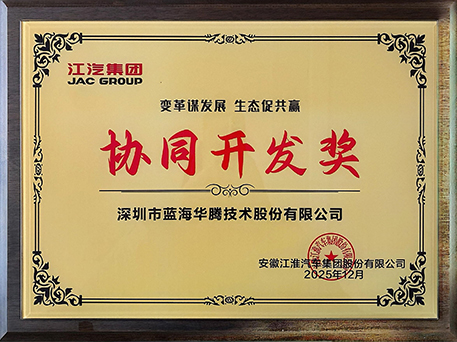
On December 19, 2025, the JAC GROUP 2026 Supply Chain Partner Conference, themed “Driving Transformation for Development, Fostering Ecosystem for Mutual Success,” was held in Hefei. As an important supply chain partner, V&T was invited to attend and received the “Collaborative Development Award.” V&T has rich experience and mature solutions in new energy vehicle technologies, covering pure electric, hybrid and hydrogen fuel cell systems. Over the past few years, V&T has maintained a strong cooperative relationship with JAC GROUP, and its R&D team has actively supported JAC’s development, testing and experiments. This award is a high recognition of V&T’s design and R&D capabilities.
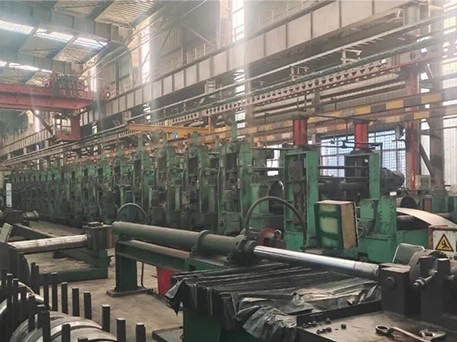
In today’s rapidly evolving and fiercely competitive steel industry, production efficiency and product quality remain the core elements of enterprise competitiveness. Today, we are excited to share a successful case study showcasing how V&T’s V9-H series inverters transformed a 1250 cold roll forming line in a steel mill—demonstrating how this upgrade enabled the production line to achieve a remarkable transformation and embark on a new journey toward high-efficiency manufacturing. The 1250 cold roll forming line is an automated production system designed for processing steel coils with a maximum width of 1250 mm. Functioning like a precision steel-shaping factory, it continuously forms hot-rolled or cold-rolled steel strips into various profiled sections through a cold roll forming process at ambient temperature. The line integrates multiple coordinated units—including uncoiling and feeding, leveling and shearing, cold forming, cut-to-length, and control systems. Its core principle relies on progressive plastic deformation via multiple roll stands to gradually bend the 1250 mm-wide steel strip into the desired cross-sectional profile. Throughout this process, an automated control system ensures precise speed synchronization among all units, accurate dimensional control, and real-time quality monitoring—guaranteeing consistently high-quality output. Urgent Need for Retrofit: The “Growing Pains” of an Aging Line However, as market demands evolve and production pace accelerates, the legacy 1250 cold roll forming line began revealing significant limitations. Mechanical components of the roll stands had aged due to prolonged use, the original inverters were undersized in power rating, and the system operated in open-loop mode using only Modbus RTU (RS485) communication for speed control. These issues led to sluggish mechanical response and poor speed synchronization across the multiple drive shafts of the roll stands. Operators were forced to constantly and manually fine-tune speed ratios between drive axes just to maintain minimal synchronization. This not only imposed heavy labor demands but also severely compromised production speed, output capacity, and product quality—making a comprehensive upgrade imperative. V&T V9-H Series Inverters: The “Key” to Transformation To better adapt to changing market conditions and enhance the overall capability of the cold roll forming line, a targeted retrofit of the roll stand drive system was launched—with V&T’s V9-H series inverters playing a pivotal role. On the mechanical side, motors, gearboxes, and drive shafts of the roll stands underwent thorough inspection and precise realignment. Encoders were added to the motors to enable closed-loop control, significantly improving motor responsiveness and laying a solid mechanical foundation for higher-speed operation. On the electrical side, modern intelligent control components—including an HMI touchscreen, PLC, and V&T V9-H inverters—were integra...
Season's Greetings from V&T Merry Christmas and Happy New Year! As the holidays approach, we'd like to thank you sincerely for your support and trust this year. We're full of anticipation for future cooperation, and look forward to deepening our partnership to create more success together in the new year. Thank you for your unwavering trust and companionship. Wishing you a festive holiday season filled with joy.
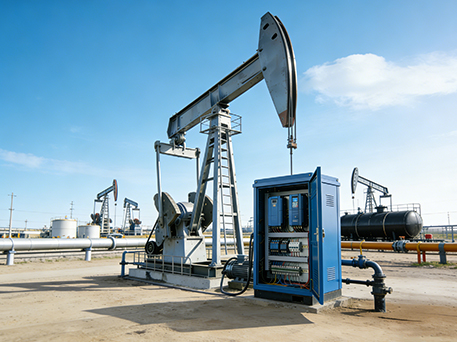
Three approaches have been adopted for the variable frequency speed control retrofit of sucker rod pumps 1.Variable Frequency Drive (VFD) with Braking Unit Control By adding a braking resistor and a braking unit to both ends of the DC bus in the main circuit of the VFD (this method has a high cost-effectiveness ratio), due to the need for high torque during the startup and ascending phase of the sucker rod pump, and during the descending phase, the motor is in a power generation state. The most critical part is the descending phase, which is a continuous operation process, while adjusting the reciprocating motion per minute according to the oil viscosity, well depth, and production rate, causing the motor to enter a regenerative power generation state, feeding excess energy back to the grid, leading to an increase in the voltage on the DC bus of the main circuit of the VFD. Without a path for electrical energy to flow back to the grid, it must be dissipated locally using resistors. This is why we must use a braking unit and braking resistor on the VFD, and our company's high-power VFDs can have built-in braking units, fully achieving the desired control effect. 2.VFD with Regenerative Feedback Unit Control A regenerative feedback unit is added to the DC circuit of the VFD to feed the electrical energy generated during the motor’s regenerative (power generation) state back into the grid. 3.VFD Automatic Intelligent Control — No Braking Unit or Regenerative Feedback Unit Required In general, no braking unit or regenerative feedback unit is required. The VFD can automatically adjust its operation according to the working conditions of the beam pumping unit, resulting in lower system cost, higher reliability, reduced harmonic pollution, and better adaptability to operating voltage variations. Two-Location Control for the Variable Frequency Speed Control System As per requirements, each variable frequency speed control cabinet is equipped with one VFD, which automatically controls the motor in open-loop speed mode. The control cabinet features a switch between line-frequency (bypass) and variable-frequency operation, offering three positions: line-frequency, variable-frequency, and stop—ensuring simple and convenient operation. When switched to variable-frequency mode, the VFD runs automatically. Speed adjustment is achieved by feeding an analog signal from the potentiometer on the control cabinet to the AI1 terminal of the VFD. During operation, real-time parameters such as current, voltage, power, and frequency can be viewed directly on the VFD’s display panel. For upper-level (remote) control, no switching is required—the VFD can be started and stopped directly, and its operating status and running frequency can be set remotely. Current operational data can also be copied and exported into documentation. Product Advantages: Comprehensive protection against external faults, including short circuit, phase loss, overload, and phase imbalance; Hi...
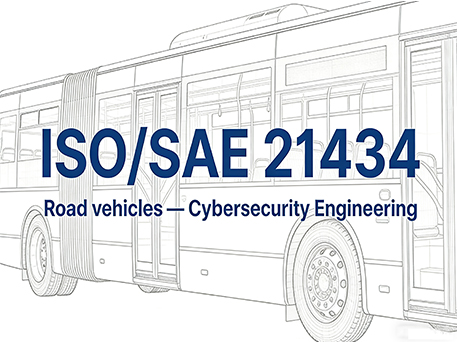
On November 28, 2025, V&T officially launched its initiative to establish a management system aligned with the ISO/SAE 21434 standard, "Road Vehicles – Cybersecurity Engineering." This move is not a sudden leap of disruptive innovation within the industry, but rather stems from long-term observation and careful assessment of automotive intelligence trends. The goal is to enhance cybersecurity resilience throughout the entire product lifecycle through a systematic framework, thereby providing more reliable foundational support for product safety in the era of intelligent connected vehicles. As 5G, AI, and IoT technologies continue to converge, automobiles are evolving from traditional means of transportation into mobile intelligent terminals. While innovations such as in-vehicle infotainment systems and advanced driver-assistance functions significantly improve user experience, they also introduce potential risks—including data breaches and unauthorized remote control. Industry statistics indicate a marked increase in global automotive cybersecurity incidents in recent years, with hackers employing increasingly sophisticated attack methods that legacy functional safety standards can no longer adequately address. Against this backdrop, ISO/SAE 21434—the world’s first international standard for automotive cybersecurity—offers critical value by embedding cybersecurity management into every phase of a vehicle’s lifecycle: design, development, production, operation, maintenance, and end-of-life disposal. Leveraging Threat Analysis and Risk Assessment (TARA) methodologies, the standard enables organizations to identify attack surfaces, quantify risk levels, and implement targeted mitigation strategies. For instance, regarding communication interfaces between in-vehicle systems and external devices, the standard mandates encrypted communications and access control mechanisms to prevent data theft or tampering. In an industry landscape often fixated on “technological breakthroughs,” V&T’s approach stands out for its restraint. Company leadership stated, “There is no such thing as ‘absolute security’ in cybersecurity, but we can continuously reduce the probability of incidents through iterative improvements. We prefer to be long-term thinkers, making steady investments to create replicable, practical examples for the industry.” This philosophy aligns closely with broader industry trends. Under United Nations Regulation No. 155 (UN R155), starting in 2024, all vehicles and components exported to Europe must obtain certification under a Cybersecurity Management System (CSMS)—with ISO/SAE 21434 serving as its core supporting standard. V&T’s systematic implementation thus responds proactively to international compliance requirements while demonstrating its commitment to advancing high-quality development in China’s intelligent connected vehicle sector. In the race toward intelligent mobility, cybersecurity has become an invisible yet existential th...
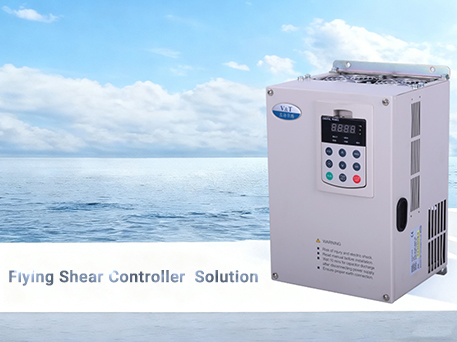
The EX-MT09 is a dedicated flying shear controller designed for corrugated board cross-cutting applications. When paired with the V&T V6-H high-performance vector drive, it enables precise flying shear control. The EX-MT09 utilizes a high-performance DSP chip from Texas Instruments (TI), offering fast computation speed, built-in flying shear control algorithms, high-speed communication capabilities, high cutting accuracy, strong expandability, and convenient system upgrades. System Control Architecture HMI Interface + EX-MT09 Controller + V6-H Drive + AC Servo Motor Product Overview The EX-MT09 flying shear controller features a high-performance core DSP chip that ensures rapid computation. It offers simple interfaces, excellent compatibility, and ease of maintenance, meeting stringent requirements for high-precision (cutting error < ±1 mm), high-speed, wide-web, efficient, and highly reliable corrugated board cutting. The controller receives position signals from the pull motor, calculates in real time, compares them with feedback signals from the cutter motor, executes its built-in flying shear algorithm, and drives the servo motor to precisely track the target position—ensuring overall electrical system control accuracy. System Control Diagram Advantages of the EX-MT09 Flying Shear Controller Solution Rich hardware resources, high expandability, and easy system upgrades; Built-in flying shear algorithm with modular interface design for simplified commissioning; High cutting precision, wide web handling capability, and high operating speed; Smooth start/stop operation with minimal mechanical shock, fast and accurate positioning, rapid speed response, and excellent high-speed synchronization performance; Fully automatic job changeover without waste paper generation, featuring dynamic length compensation during acceleration/deceleration cutting; Open system architecture enabling seamless integration and interoperability with equipment from other manufacturers—especially production management systems.
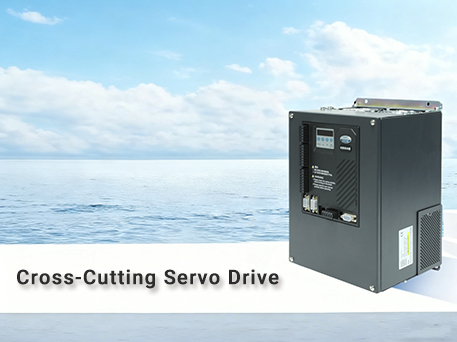
The VA-MQ cross-cutting servo drive is a high-performance servo drive developed on V&T's advanced vector control and torque control core drive platform, integrating both cross-cutting flying shear control algorithms and motor servo drive control algorithms. 1、System Control Solution HMI Interface + VA-MQ (with built-in flying shear control algorithm) + AC Servo Motor 2、Product Overview The VA-MQ servo drive features rapid speed response, high output torque, and advanced vector control, torque control, and servo control technologies aligned with international leading standards. It meets the demanding requirements of corrugated board cutting applications—high precision (cutting error less than±1 mm), high speed, wide material width range, high efficiency, and high reliability. The drive integrates a specialized cross-cutting flying shear control algorithm and servo motor drive algorithm, enabling precise positioning and fast-response synchronous speed tracking. 3、System Control Diagram 4、Advantages of the VA-MQ Control Solution Dual-core DSP control – Delivers superior control performance. Built-in flying shear algorithm – Simplifies wiring and enables easy commissioning. High-precision, wide-width, high-speed cutting – Meets demanding production requirements. Smooth start/stop with minimal mechanical shock, fast and accurate positioning, rapid speed response, and excellent high-speed synchronous tracking. Supports external capacitor box – Enhances energy efficiency and ensures stable, reliable operation. Fully automatic job changeover without waste paper, featuring dynamic length compensation during acceleration/deceleration for consistent cut accuracy. Open system architecture – Easily integrates and interfaces with equipment from other manufacturers, especially production management systems.
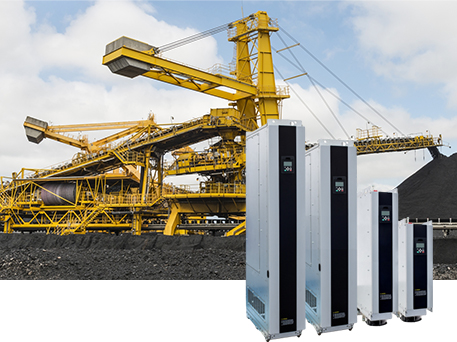
In today's era of rapid industrial automation, drives serve as critical components ensuring the stable operation of numerous mechanical systems. Their performance directly impacts the efficiency and quality of production processes. Leveraging deep technical expertise and continuous innovation, V&T has meticulously developed the DTS800 series of multi-drive inverters. With distinctive technological advantages, a comprehensive product portfolio, and broad applicability, the DTS800 series delivers reliable and high-performance power solutions across a wide range of industrial sectors, significantly contributing to industry advancement. The DTS800 series is V&T’s self-developed multi-drive inverter platform, featuring proprietary Direct Torque Control (DTC) technology. It offers fast torque response and superior speed regulation accuracy, supporting both encoder-based and encoderless DTC operation. Thanks to its unique DTC algorithm, the drive maintains high low-frequency torque and rapid torque response even without an encoder, satisfying the requirements of most industrial applications. The V&T DTS800 drive family includes: DTS800-H series: Single/multi-drive inverter units DTS800-D series: Basic rectifier units DTS800-S series: Parallel slave inverter units DTS800-R series: IGBT rectifier/regenerative units DTS800-MCB: Parallel master control unit The DTS800 series supports both single-drive and multi-drive configurations. It also enables multiple inverter units to operate in parallel to drive a single motor, facilitating scalable power capacity through parallel operation. Available in two voltage classes—three-phase AC 380V and AC 690V—the series covers a wide power range from 75 kW to 2,240 kW. Product Features: Control Algorithm Employs advanced Direct Torque Control (DTC) technology, optimized for asynchronous motors. Enhanced motor control robustness. Reduced sensitivity to motor parameter variations. Fast torque response capability. Supports both scalar (V/f) control and Direct Torque Control (DTC). Usability Standard equipped with an LCD operation panel. Menu-based parameter structure with a dedicated setup menu for initial commissioning. Parameter options designed for intuitive selection. Five default display screens, switchable at will; users can freely customize the information shown on the default display. Supports parameter upload and download. Enables PC-based commissioning and waveform capture via host software. Built-in web server allows browser-based debugging—no PC software installation required. Supports remote firmware upgrades. Mechanical Design Book-style drive unit design for compact and modular installation. Full series powered by DC bus with integrated pre-charge (buffer) circuit. Recessed terminal layout for control wiring, enhancing protection and ease of access. Communication Supports Modbus-RTU, CAN, PROFINET, and PROFIBUS-DP communication protocols. Encoder & Pulse I/O Compatible with optical encoders. ...

The controller is the core component of an electric bike, acting as its "brain." It controls the motor’s start, stop, direction, speed, and other electronic parts. How it works: The controller actively manages the motor, making it run in the desired direction, at the right speed, and with smooth response. In electric vehicles, it uses power from the battery and converts it to run the motor. It responds to user inputs like throttle, brake, and gear selection. This controls how the vehicle moves—whether it’s starting, speeding up, climbing a slope, or braking. It can also help with braking energy recovery, storing some of that energy back into the battery. V&T now introduces a new series of electric vehicle controllers. We provide core power solutions for electric vehicle manufacturers. This series is built to be reliable, high-performing, and easy to adapt. It’s designed to be the ideal power control partner for your product line. Wide Compatibility This controller series is designed for popular types of electric vehicles, including: Electric mopeds Electric motorcycles Electric forklifts Electric golf carts The power range covers 250W–450W, 350W–1500W, and 1500W–3500W. We offer solutions for both hub motors and mid-drive motors. The design is flexible, so it can meet different power needs across your product range. Built to High Safety Standards We follow strict industrial standards to make sure our controllers are safe and reliable over time: High voltage resistance: AC1500V rating, for better reliability during voltage surges. Strong water resistance: IPX7 waterproof rating, so it works well even in harsh conditions. Flame-retardant materials: Key parts use V0-grade materials for improved safety. Key Benefits for Better Performance Easy to install and maintain: Plug-in terminals make assembly simple and reduce maintenance time. Good heat control and stability: We use a cast aluminum heat sink and a layered circuit board design. This helps heat spread evenly and keeps the controller stable during heavy use. Works in tough conditions: The shell is waterproof and protected against interference, high voltage, and short circuits. This means it can handle different environments well. Smooth power control: It accurately controls motor current, which helps the vehicle run smoothly and respond well. Better riding experience: Special motor control algorithms keep the ride steady, especially at high speeds, for a more comfortable feel.

Amid the urban hustle, certain landmarks instantly define a city's character. The Shenzhen Bay MixC Music Fountain is one such landmark. Chosen for V&T's proven expertise and reliable partnership, VFDs serve as the core component driving this spectacular water feature. V&T variable frequency drives are instrumental in transforming a basic hydraulic setup into a dynamic, energy-efficient art installation. Their advanced drive and control capabilities elevate the entire performance. Precision Control The fountain's 13 independent water channels are individually controlled by VFDs, enabling seamless speed adjustment. This allows for diverse water formations—from majestic "curtain" falls to gentle "stream" flows—creating a visually layered experience. Energy Efficiency The system eliminates the need for constant full-load operation. Like an intelligent conductor, it adjusts power output based on the scenario—daily operation, holiday shows, or night displays—significantly reducing energy use and operational costs. Smooth Operation & Durability Soft start and stop functions prevent mechanical shock and water hammer effect, minimizing wear on pumps and pipes. This extends the system's lifespan and reduces maintenance needs. Adaptive Intelligence Programmable settings allow effortless switching between operational modes—from a powerful daytime display to a dreamlike nighttime scene. The system can even mimic natural water movements. Its robust design ensures that if one drive fails, the others continue operating normally. In this fusion of art and technology, V&T VFDs prove to be more than components—they are the soul of the "Water Symphony." Moving forward, V&T remains committed to breathing life into urban landscapes through innovation.

At the recently opened 134th Canton Fair, Shenzhen V&T Technologies Co., Ltd. became one of the notable highlights with its strong product lineup and innovative technologies. The company made a grand appearance, showcasing core products such as VFDs, electric vehicle motor controllers, hybrid solar inverters, and servo systems, attracting a large number of domestic and international business visitors for discussions and exchanges. V&T's series of VFDs, with their exceptional energy-saving effects and stable control performance, became a focal point for customers in the field of industrial automation. Utilizing advanced control algorithms, these products enable precise motor speed regulation and have demonstrated outstanding performance across various industrial application scenarios. The servo products exhibited by the company, known for their high response and high precision, meet the demands of complex industrial applications. Live demonstrations drew significant interest from numerous professional visitors. In line with the global energy transition trend, V&T Technologies introduced its new energy vehicle motor controller, which features innovative design that effectively enhances the energy efficiency and driving range of electric vehicles, making it a standout highlight at the event. The hybrid solar inverters, as one of the company's key showcased products, received high recognition from business visitors in regions such as the Middle East and Europe, thanks to their high conversion efficiency and reliable performance. The V&T Technologies booth was bustling with visitors, including a continuous stream of procurement delegations from Belt and Road Initiative countries and RCEP member nations. Technical staff patiently and meticulously explained product features and demonstrated performance to every visiting business representative. "We are very interested in V&T Technologies' photovoltaic inverters," said a procurement delegate from the Middle East. "The product's performance and stability fully meet our requirements, and we have preliminarily reached a cooperation intent." During the fair, the V&T Technologies booth received visitors from over 50 countries and regions worldwide, secured multiple intent orders on-site, and established initial cooperative relationships with more than ten overseas clients.

The 25th China International Industry Expo concluded successfully. As a dedicated player in industrial automation and new energy, V&T engaged in in-depth exchanges with numerous industry partners and professional visitors during the five-day event, showcasing its full range of products, dynamic technology demonstrations, and systematic solutions. Together, they explored practical directions for smart manufacturing in the new energy and industrial automation sectors. Full Product Portfolio: Addressing Needs with Solid Technical Capabilities At this year’s expo, V&T highlighted its comprehensive product line for industrial automation and new energy, including frequency converters, servo drives, electric vehicle motor controllers, elevator drive and control systems, and photovoltaic energy storage systems. Among the spotlighted products were the V6-H Series electric vehicle motor controller, V9 Series frequency converter, VTS30 Series frequency converter, VTS300/400 Series frequency converter/servo drive, DTS800 Series multi-drive system, V9-HCF high-carrier frequency liquid-cooled frequency converter, V9-BA pass-through heat dissipation frequency converter with anti-cotton and anti-metal dust features, V9 high-protection IP67 frequency converter, VA Series spindle servo drive, and VTF energy feedback unit. These products attracted significant attention for their reliable performance and adaptability. In the dynamic demonstration area of the booth, V&T's eight-axis servo motor control system showcased multi-axis synchronization effects through complex trajectory movements, powered by the coordinated operation of the VS510 Series EtherCAT bus servos, DP2000 touchscreen, and VC3 eight-axis motion controller. The demonstration vividly highlighted the system's performance in control precision and flexibility. This presentation captured the attention of clients from industries such as machine tools, textiles, and laser equipment. Several corporate representatives remarked after the experience, "The eight-axis servo motor control system demonstrates the coordination effects very clearly. It can address the control challenges we face in our equipment operations, and we look forward to further discussions on potential applications." Systematic Solutions: Providing Practical Support from Equipment to Scenarios At this exhibition, V&T showcased its integrated five-tier solution encompassing the "Industrial IoT Platform, Edge Layer, Control Layer, Drive Layer, and Execution Layer." This architecture enables equipment interconnection and intelligent decision-making through seamless data integration, delivering actionable support for various industries such as textiles, air compressors, elevators, energy conservation, and intelligent water supply. Leveraging an industry-specific algorithm library and flexible configuration tools, the solution can be rapidly tailored to meet the customized needs of different scenarios. During the event, several co...


Dear Valued Customers, Please be advised that our company will be closed from October 1st to October 8th, 2025 in observance of two important Chinese festivals: National Day: Celebrating the founding of the People's Republic of China. Mid-Autumn Festiva: A symbolic occasion for family reunions, marked by sharing mooncakes and admiring the full moon. Our office will resume normal operations on October 9th, 2025. Please note that order processing and email replies may experience delays during this period. We apologize for any inconvenience this may cause. We truly appreciate your continued support and cooperation. We look forward to serving you again after the holiday.
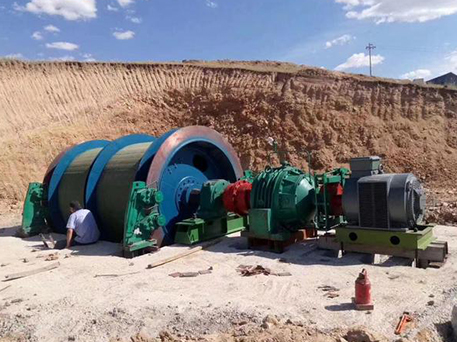
The mine hoist plays a central role in coal mining. It moves coal and waste rock from underground workings to the surface. It also carries workers, supplies, and equipment up and down the mine. Older hoists use wound-rotor motors with resistor-based speed control. This method wastes a lot of energy. Nearly one-third of the electricity is lost as heat in the resistors. Speed regulation is uneven and inefficient. At lower speeds, the motor performs poorly. It becomes weak and unsteady. The equipment suffers from heavy shocks. This leads to breakdowns and accidents. It also requires constant upkeep. Parts like contactors and brushes wear out quickly. The mechanical brake system takes a lot of abuse. Maintenance is expensive and time-consuming. Application of VFDs in Mine Hoist Using a V&T VFD changes everything. It provides strong torque even at very low speeds. The hoist starts and stops smoothly. There’s no creeping or sudden jerks. Everything runs more steadily. The speed adjusts smoothly without steps. There’s less shock to the gearbox and brake. That means less wear and longer life for the equipment. There’s no need for old-style contactors or brushes. Simple squirrel-cage motors work perfectly. Maintenance becomes much easier. The drive also includes full protection and monitoring. Used together with a PLC, it makes the whole system far more reliable. And best of all—it saves energy. No more wasting power on resistance banks. With the V&T drive, mine hoists run safer, smoother, and more efficiently. They also cost less to maintain. It’s a modern solution that helps keep mining operations running continuously.

In industrial production, the efficient and stable operation of speed control systems is paramount. Traditional systems often face challenges like low power factor, difficulty in energy regeneration, and significant harmonic interference, constraining production efficiency and quality. Active Front End (AFE) technology provides an effective solution to these issues. V&T's DTS800 Series AFE products are designed precisely to meet the demands of high-performance speed control. An AFE is a drive unit that supplies DC power to a variable frequency drive (VFD) via PWM rectification while simultaneously regenerating braking energy from the motor back to the grid. Together with the motor drive section, it forms a complete AFE speed control system, enabling four-quadrant operation for motor-driven speed regulation. DTS800 Series Core Components: DTS800-R AFE Rectifier/Regeneration Module: Supports constant voltage, constant current, and constant power modes. Performs sinusoidal PWM rectification and energy regeneration. Ensures the resulting AFE system delivers low grid-side current harmonics. DTS800-H Drive Inverter Module: Employs independently developed DTC (Direct Torque Control) technology. Delivers rapid torque response and high speed regulation accuracy. Supports DTC control with or without an encoder. Unique DTC technology ensures excellent low-speed torque and fast torque response even during encoderless operation Wide Application Scope: The DTS800 Series AFE products are ideally suited for applications requiring stable power supply and efficient regeneration of motor braking energy to the grid, including: Crane equipment, centrifugal equipment, oilfield equipment, experimental test platform, opposite drive system, downhill conveyor belt, winch. The V&T DTS800 Series AFE products demonstrate solid and reliable characteristics across key aspects: four-quadrant operation capability, energy regeneration efficiency, control algorithm implementation, ease of use, communication support, and structural design. Their robust and high-performance nature precisely meets the stringent requirements of modern industrial production for speed control systems while aligning with industry trends.

In factories, inverters are key for controlling motors, helping them run at the right speed and save energy. Sometimes, several motors need to run at exactly the same speed, or work together to move one big thing, like a long production line. Using one bigger inverter to control multiple motors at once can be a cheaper and smarter way to do this. How you start the motors decides which method you use: starting them all together, or starting them one after another. Method 1: Starting and Stopping Together When to Use It: When motors (especially identical ones, made by the same factory) must run at the same speed, perfectly in sync. How It Works: One large inverter powers all the motors simultaneously. They start and stop together. The Big Plus: It saves money and gets the job done well. Picking the Right Inverter: The inverter must be big enough to handle all motors combined. The inverter must be strong enough (provide enough electrical current) for all the motors. Its rated current needs to be at least 1.2 times the total current all the motors use. Important Things to Remember: Control Mode: You must use open-loop V/F control. Other smarter controls need details about one specific motor and won't work well here. Matching Motors: The motors shouldn't be too different in size. It's best if they are the same model, made by the same company, even the same batch. This helps them run together smoothly. Watch the Wires: Keep all the wires running from the inverter to the motors as short as possible. Long wires cause problems. If the total wire length is too long, you might need extra parts (like an output reactor or filter) near the inverter. Protect Each Motor: Every single motor needs its own thermal overload protector (like a heat-sensing switch) right before it. This protects it if it gets too hot. Stopping Fast: If the motors need to stop very quickly, you'll likely need a special braking unit and resistor. Some smaller inverters have the braking unit built in—just add the resistor. Method 2: Starting One After Another When to Use It: When different parts of a machine need to start at different times. How It Works: The inverter acts like a power source. You switch its power to one motor at a time. The Big Plus: You need fewer inverters, saving cost. The Critical Rule: Never, ever let two or more motors run from the inverter at the same time. If this happens, the inverter will be overloaded and likely damaged. In Summary Using one inverter for multiple motors (starting together or separately) is a smart, money-saving trick in factories. To make it work safely and well, you must pick an inverter that's powerful enough and follow the specific rules for how you start the motors (like using the right control mode, matching the motors, keeping wires short, adding individual motor protection, and preventing overlap). Doing this right means reliable equipment and lower costs.

V&T, working with Zhongchuang Minghui, has successfully installed its new grab crane control system at Dongdaqiao Station and Future Science City Station. Customers report good results. Solving Old Problems: The older way to run these cranes used cam controllers, contactors, and resistors. This method caused several issues: machines broke down often, wiring was complicated, they wasted power, and operators couldn't adjust speeds very well. How V&T's Frequency Converters Help: Smarter Grab Control: The operator sends a signal. The control system (PLC) then checks the motors' current, torque, and speed. V&T frequency converters adjust the motors' speed and power smoothly. This keeps the grab bucket moving efficiently and stops material from spilling. Even if mistakes happen: If the grab opens too soon while lifting, the operator doesn't panic. Using low speeds 1 or 2 for about ten seconds lets the grab close itself. This makes the job easier and needs less skill. Better Visibility for High Work: When the crane works high up, operators struggle to see the grab bucket clearly. This slows things down. V&T's system shows everything important on a touchscreen. Operators work faster and don't need years of experience. Smooth Speed Changes & Savings: The grab open/close motor uses 3 speed settings. Other motors (trolley, bridge, auxiliary hoist) use 4 settings. V&T frequency converters make all speed changes very smooth. Starting is gentle, low speeds are steady, and less electricity is wasted as heat. This is easier on the motors, especially with lots of stopping and starting, helping them last longer. A shared power setup (DC bus) for the main and travel drives uses fewer cabinets, lowering the customer's costs. Easy Monitoring & Fixes: All V&T frequency converters connect to the PLC using communication cables. The PLC connects to the touchscreen. Operators see the system status and data on the screen. They can also change some settings there easily. If something goes wrong, the screen shows exactly where the problem is, including specific error messages from the frequency converters. This helps technicians fix things fast. The Result: V&T frequency converters provide smooth starting, precise speed control, and strong protection. Combined with the PLC, they create a safer, more accurate, and efficient way to run grab cranes. The clear touchscreen display is key. The success at Dongdaqiao and Future Science City shows V&T's system improves crane automation, efficiency, and ease of use.

Product Overview The V9-HCF high-carrier series inverter is a high-performance vector inverter designed for medium- and high-power high-speed motor applications. Based on the study of inverter drive and hardware/software requirements in high-speed applications, this series is specially developed to better meet the needs of high-speed motor driving. The product comes in air-cooled and water-cooled versions. In terms of structure, users can choose between wide and narrow body types. Product Features 1.Control Algorithms Uses advanced high-speed motor control algorithms Works with both synchronous and asynchronous motors Offers strong high-speed control and deep flux weakening capability Supports multiple control modes: synchronous motor closed-loop/open-loop, asynchronous motor closed-loop, V/F, asynchronous motor current vector, and asynchronous motor voltage vector 2.Structural Design Offers two structural styles: traditional and book-style narrow type Designed with heat dissipation in mind for high-power motor applications Even under the standard 10K carrier frequency, the components show excellent thermal performance The entire series supports shared DC bus operation 3.User-Friendliness Comes with an LCD control panel Parameters are organized in a menu-based structure, with separate menus for initial setup Five default display interfaces can be switched, and default display content can be customized Parameters can be uploaded or downloaded with one button Supports PC-based debugging and waveform capture 4.Communication Standard Modbus-RTU/CAN communication included Optional PROFINET or Profibus-DP communication modules available Power Range Wide-body water-cooled type: 3 AC 380V, 110–630kW Narrow-body water-cooled type: 3 AC 380V, 75–500kW 3 AC 690V and air-cooled models are available upon request Application Scenarios The V9-HCF high-carrier series inverter is widely used in high-speed blowers, magnetic levitation systems, air suspension systems, high-speed air compressors, and municipal wastewater treatment plants — all typical high-power, high-speed motor applications. Field Applications
Categories
 3-8th Floor, Tower 2, Zhiyan lnnovation Building, Yutang Street, Tianliao Community, Guangming District, Shenzhen, Guangdong Province, China.
 Ms. Nina


If you are interested in our products and want to know more details,please leave a message here,we will reply you as soon as we can.


